胡雪岩
Chinese teenagers flock to tech frontline to touch the future amid AI study-tour boom_我的网站

一 | RAVENA, N.Y. -- New York officials launched legal recreational marijuana sales by promising many of the first retail licenses to people with past drug convictions, hoping to give people harmed by the war on drugs a chance to succeed before competitors crowded in.But more than nine months after sales started, only about two dozen state-sanctioned dispensaries have opened their doors. Legal challenges over the state's permitting process have left more than 400 provisional licensees in limbo. Marijuana farmers are reeling because there are too few stores to sell their harvest.State regulators are now expanding the market amid those troubles. They recently opened up a 60-day general application window to grow, process, distribute or sell marijuana, expecting to issue more than 1,000 new licenses. New rules also will allow companies licensed to grow and sell medical marijuana in New York to get into the recreational market.The moves are expected to boost the number of legal dispensaries in a market now dominated by black-market sellers who simply opened retail stores without a license. But the prospect of competing with the medical providers worries some farmers and retailers who fear being squeezed by deeper-pocketed companies before they had a chance to establish themselves.“My concern is that they have all the money to bleed us out,” said Coss Marte, whose opening of CONBUD dispensary in Manhattan was pushed back by a lawsuit against state regulators. “They’re vertically integrated. So now what they could do is ... grow their own product at the cheapest price and basically outbid all the farmers, all our products and all our pricing.”Critics blame New York’s slow retail growth partly on bureaucratic issues, like delays in setting up a $200 million “social equity” fund to help applicants open shops. The rollout also was hobbled by lawsuits on behalf of people and businesses excluded from the first wave of retail licenses. Marte's shop was among those temporarily blocked by a judge from opening after a group sued on behalf of disabled veterans, saying they were wrongly excluded from applying for a license. Marte, who has a past drug arrest, was paying rent on a store he could not open.A judge recently ruled that Marte's store and several others could open. But the fate of many other provisional license holders, like Carson Grant of New York City, was unclear. After months of delays in opening his store in Queens, he was debating whether to reapply for a license again in this general round.“It's very difficult emotionally,” he said.Reginald Fluellen, senior consultant with the Cannabis Social Equity Coalition, blamed the state for a botched rollout.“They’ve failed miserably in providing the justice-involved individuals the kind of head start, the kind of foothold, in the market that they promised," Fluellen said.Under new regulations, medical marijuana providers could begin retail recreational sales at one of their existing dispensaries as early as Dec. 29. They could begin selling recreational pot at two more dispensaries six months after that. The entry price for those companies is steep: a $20 million licensing fee, with $5 million due upfront. But multiple companies are expected to jump in.“We expect New York to be the hub, or one of the hubs, for legal cannabis on the East Coast,” said Curaleaf CEO Matt Darin. “And so we’re very bullish and we’ve invested a lot of capital and time to be able to maximize the opportunity.”Curaleaf, which operates in multiple states, has already invested $50 million in New York, most of it on a recently expanded indoor growing facility south of Albany that now serves the medical market. Rows of plants there mature in intensely lit rooms where humidity, temperature and nutrition are tightly controlled — a scene in stark contrast to the fields and greenhouses that have defined New York’s adult-use market since growing started last year.Curaleaf will be able to double the size of the facility’s canopy to 64,000 square feet, or about 1.5 acres (0.61 hectares), if the market dictates, said Joe Holland, an executive vice president.To guard against retail monopolies, the medical providers will be limited to three retail outlets. And in a nod to farmers, their shops will initially have to devote half their shelf space to products grown and processed by independent businesses.Still, critics say the state should have allowed more time for economically and socially diverse entrepreneurs to succeed before letting in larger competitors.Joseph Calderone of Grateful Valley Farm, near the Pennsylvania border, compared it to little hardware stores competing against big box stores. Large indoor facilities, he said, can produce multiple crops a year. Meanwhile, farms having trouble selling their crops are “teetering on the edge of failure,” he said.“We were given a fair chance to grow. We were asked to do that," he said. "We kept our promise. The state did not keep their promise.” Office of Cannabis Management executive director Chris Alexander said the new regulations maintain New York’s commitment to social and economic equity, while keeping the market more competitive than in other states. That includes giving priority consideration for social and equity applicants in the current round.While acknowledging there was some “frustration” in getting retail stores open, Alexander said the state has shown a market supplied by small farmers can work. "We've got some of the top-performing dispensaries in the country right here in New York," Alexander saidAnd there’s still room to grow. Regulators have estimated New York will eventually require at least 2,000 dispensaries to meet demand. “I think there’s enough business to go around,” said Christian Chavez, CEO of Statis Cannabis Co. He said sales have been good since they opened their dispensary in the Bronx in July. “I think it’ll be quite some time until this market gets saturated in New York.”。
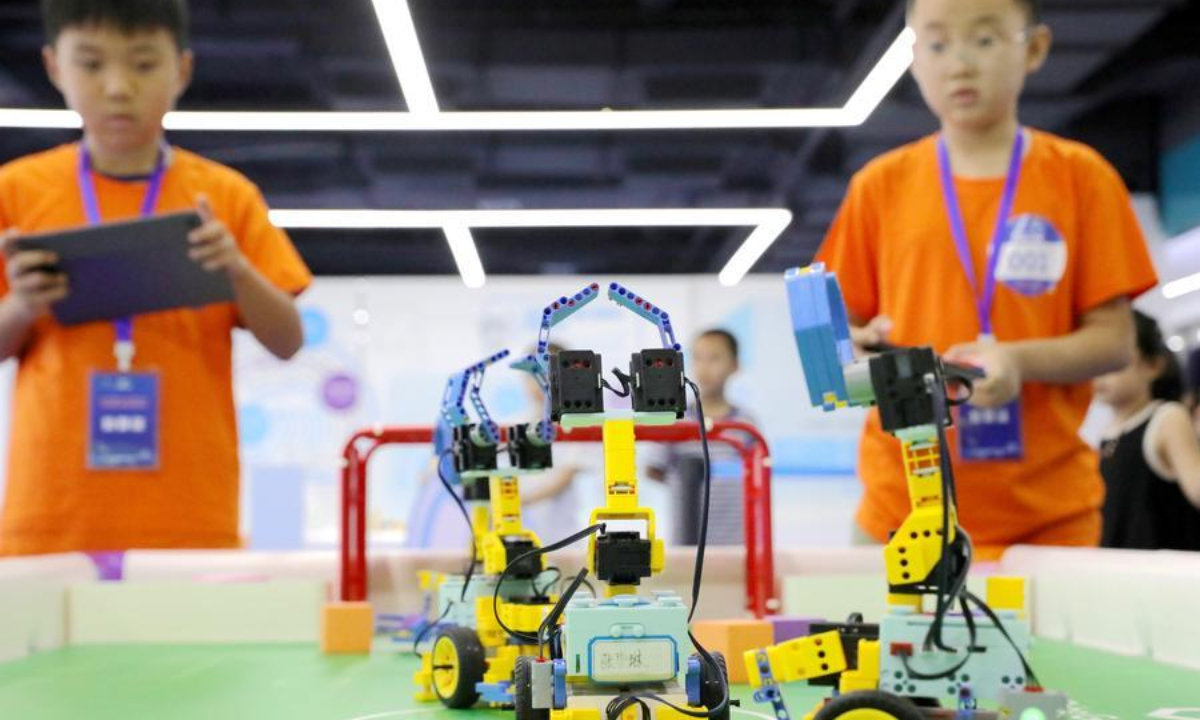
At a nearby workbench, nine-year-old Zhang Qihang was busy assembling a robot of his own. "Building robots is awesome! I can let my imagination run wild," he said, beaming with excitement.
This was the scene at an artificial intelligence (AI) summer camp -- part of a new wave of study tours gaining traction across China. Moving beyond textbooks, students are flocking to tech giants, university labs and science centers, eager to get hands-on experience with cutting-edge AI technologies and see firsthand how the future is taking shape.
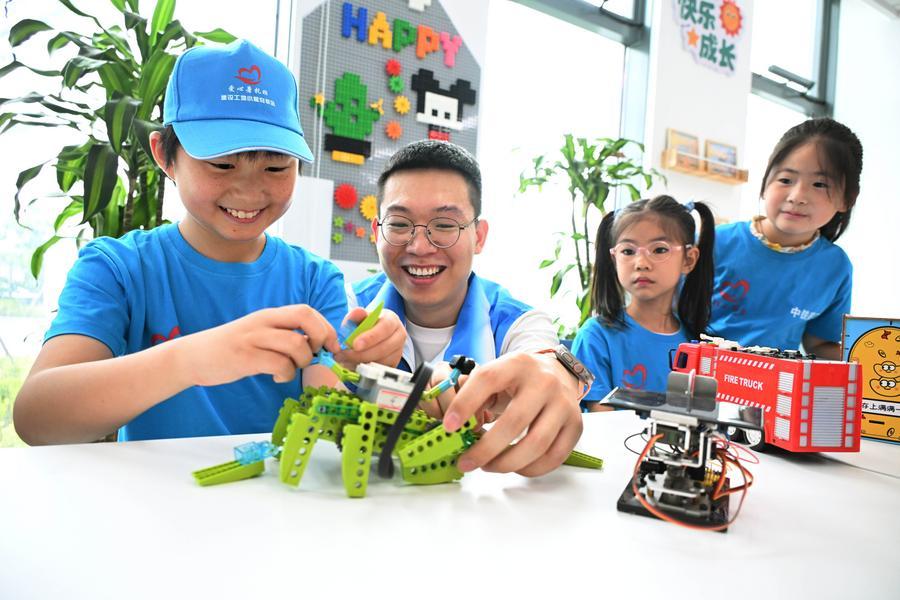
AI STUDY-TOUR BOOM
During this summer vacation, AI-themed study tours have begun to gain ground, with bookings surging 370 percent year on year, according to online travel platform Ctrip.
To tap into the growing demand for AI-focused tech tourism, a travel agency based in Nanjing, east China's Jiangsu Province, began adding visits to technology companies to its trip programs last summer. "On our Shanghai-Hangzhou independent study tours, AI-related activities now account for more than 80 percent of the itinerary," founder Zhu Ping said.
The boom is unfolding against the backdrop of China's broader AI boom, powered by a wave of homegrown models and applications. For a growing number of Chinese teenagers, AI tools such as DeepSeek, Kimi and Doubao are becoming familiar companions in their everyday lives.
The number of AI enterprises in China had surpassed 6,000 last year, and the output value of the core AI industry was projected to exceed 1.2 trillion yuan (about 177 billion U.S. dollars) during the same period, representing a year-on-year increase of nearly 30 percent.
Moreover, China was home to more than 140 humanoid robot developers in 2025, with shipments reaching 14,400 units -- accounting for 84.7 percent of the global market, according to an industry research report.
To help children prepare for an AI-driven future, China unveiled an "AI Plus Education" initiative earlier this year, encouraging schools to take AI learning beyond the classroom through after-school programs and hands-on activities. The goal is to help students understand and use AI properly, while sparking curiosity, nurturing creativity and honing their critical-thinking and problem-solving skills.
Today, the AI study-tour wave is sweeping through China's schools, as primary and secondary schools incorporate it into their educational programs. Parents are taking their children into the heart of the tech industry to see how AI transforms the real world.
China's tech-tourism boom is also drawing international visitors keen to get a close-up look at the innovation behind "Made in China."
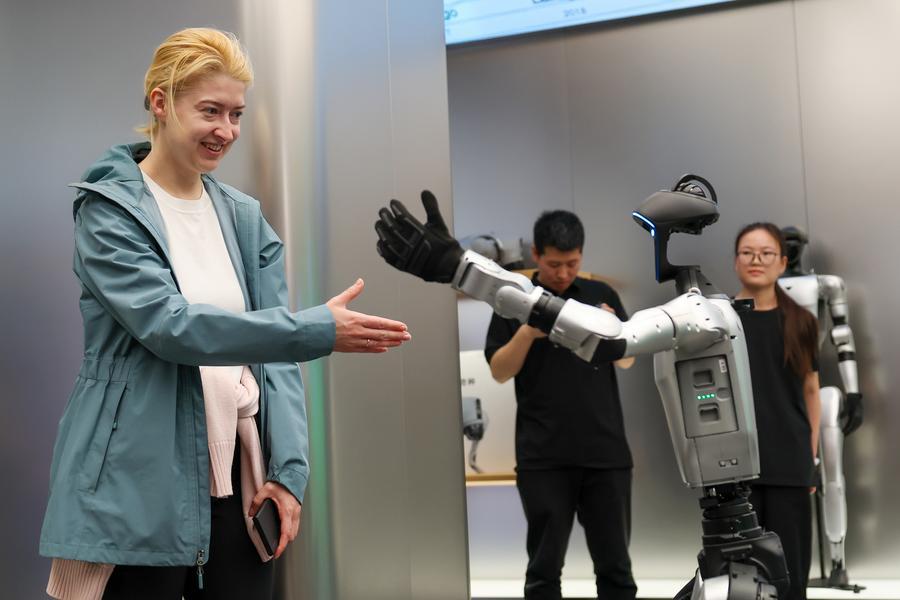
Since opening in Shanghai in May, Unitree Robotics's first embodied intelligence experience store in Asia has attracted many foreign visitors.
Victoria, from Denmark, visited the store last month. "I've seen some of the dancing videos, but it's really cool to see them in real life," she said, viewing the development of AI and robotics in China as "revolutionary, new and exciting."
FROM AI USERS TO AI CREATORS
Today's children are growing up as AI natives, already fluent in AI tools. But AI study camps are opening a new window onto how the technology is reshaping the world around them and how they can use it to make a difference.
For Liang Yiduo, a Beijing middle school student, an AI summer camp run by internet giant NetEase offered a fresh perspective on the AI technology he thought he already knew.
"I realized that large language models aren't just chatbots or simple tools," he said. "They can be assistants that work alongside you and help you create things tailored to your needs, like 'claws.'"
"The goal of the study camp is to help children move from simply using AI to understanding it, creating with it and even building their own AI agents," said Wang Lijin, director and founder of Beijing Venus Future Education Consulting Center, which assists NetEase in running its study camps.
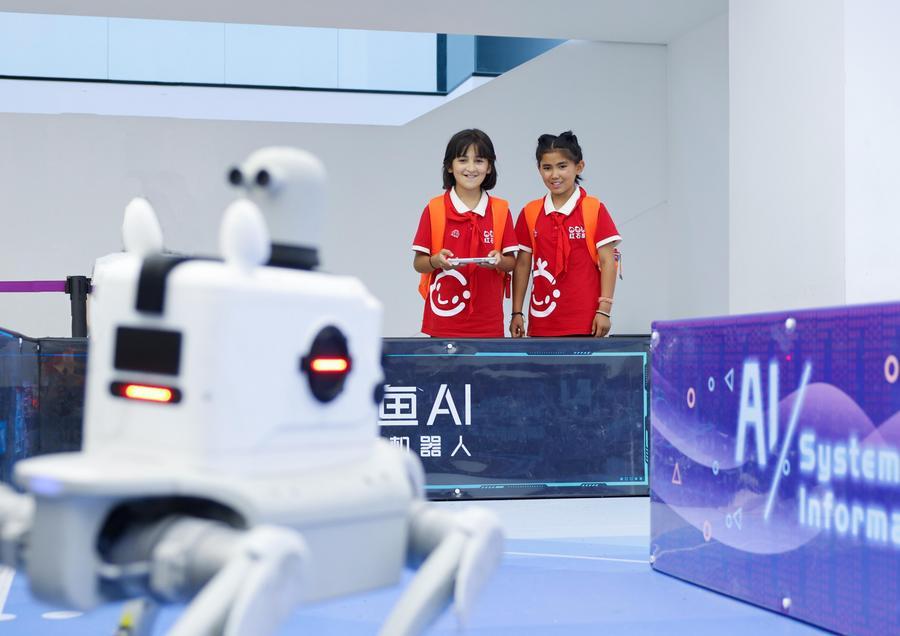
Some study tour organizers design programs around students' interests and abilities, aiming to spark curiosity and encourage deeper thinking.
Shanghai Qingbao Robot Co., Ltd., for example, offers students who enjoy building things the chance to assemble robotic arms and explore the mechanics of shoulder and neck structures. It also gives students a comparative look at the robotics and AI industries in China, the US, Europe and Japan, helping them gain a more balanced understanding of China's strengths and shortcomings.
Wang Lei, the company's chairman, believes that study tours can greatly broaden students' horizons in science and innovation. "Through immersive study tours, students start thinking for themselves about how robotics can be applied to everyday life, from unmanned retail to automated pharmacies," he said.
Some students are taking it a step further, learning to spot real-world problems and use AI to develop solutions.
In the southern Chinese city of Shenzhen, a group of students spent six days in a camp turning ideas into an AI-powered product.
"I've realized that learning AI isn't about showing off what I can do with it, but about using it to solve real problems for others," said one team member. "I want to keep learning AI so I can help more people in the future."
。

二 |
Current article:http://p6oz5g6.wairanleichengwochengzhui.shop/l10/20260826/91089.html
Published on:04:04:24
 极度深寒
极度深寒 拥抱太阳的月亮
 花千骨
花千骨 请回答1997
 极速之巅
极速之巅 一米阳光
一米阳光 银翼杀手
银翼杀手 人间正道是沧桑


